A surprising new environmental coalition

Yesterday I had the pleasure of joining over 100 of my fellow energy policy geeks as we filled to overflow capacity the hearing room of the Washington Utilities and Transportation Commission (UTC). It was the largest crowd ever to attend a UTC hearing, and we were there to voice objections to a plan by Puget Sound Energy (PSE) to continue operation of the coal plant in Colstrip, Montana, for another two decades at least.
“THE COLSTRIP COAL PLANT IS THE BIGGEST SOURCE OF CARBON POLLUTION IN THE ENTIRE NORTHWEST.” –SIERRA CLUB
The Sierra Club organized the activity, including transportation to and from Olympia where the commission does its work. The venerable environmental group has gotten involved because approximately 30 percent of PSE’s electricity comes from Colstrip, and PSE is the single largest owner of that plant.
Among the wide array of experts and interested citizens participating in the hearing were Montana ranchers directly harmed by the pollution emanating from smokestacks and collecting in ponds around Colstrip, public officials from both Montana and Washington (Nathaniel Jones, Mayor Pro Tem of the City of Olympia, was particularly eloquent), and scientists and attorneys speaking to the degradation of water and air quality attributable to the Colstrip plant.

For its part, the three-member UTC board patiently listened to some five hours of testimony, asking numerous questions and sparring occasionally with environmental attorneys when the latter seemed to be asking more of the commission than its defined charter permitted. Essentially that charter is an economic one: to determine whether a private utility can pass the cost of capital investment on to its customers via their electricity bills. But commissioners admitted that environmental and even moral arguments could ultimately factor in to their economic analysis and decisions.

So, will this large-scale effort to influence the UTC amount to anything? I am genuinely encouraged that it will, at the very least, cause the commission to recommend to PSE that it revise its 20-year plan, and provide some specifics around retiring at least the two older of Colstrip’s four coal-fired boilers.
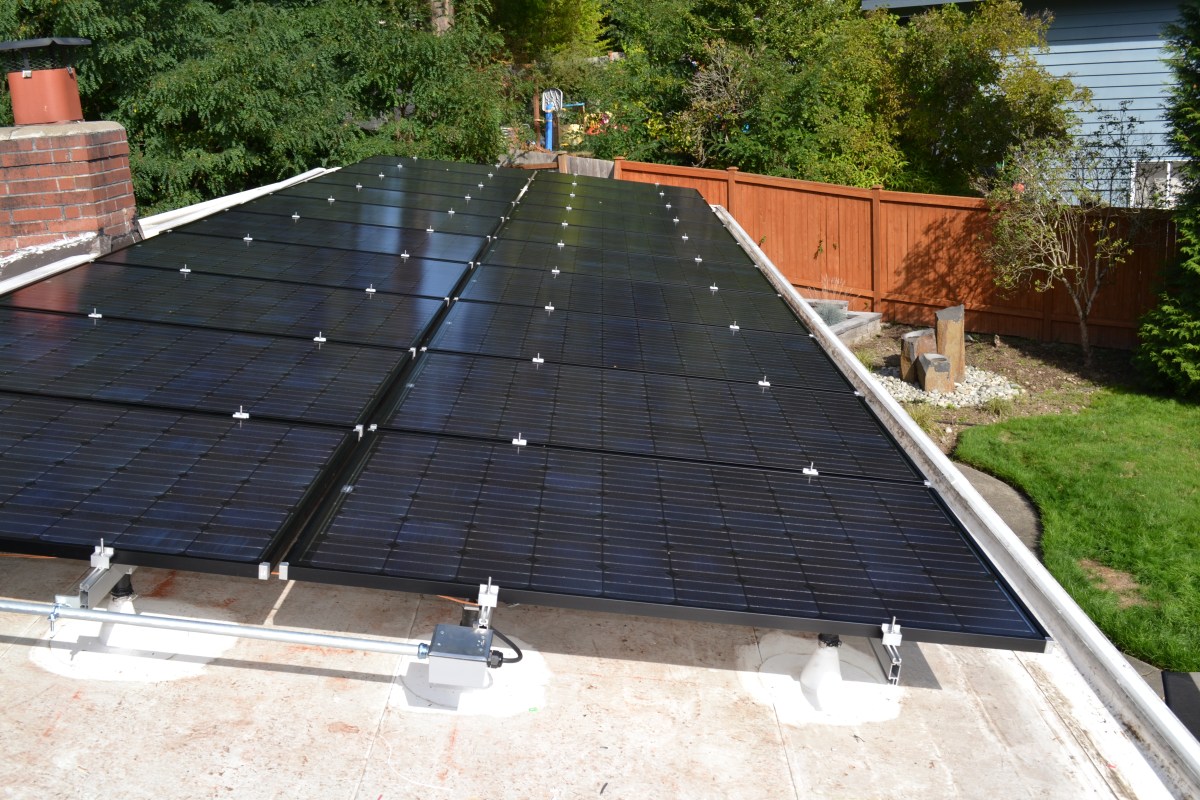
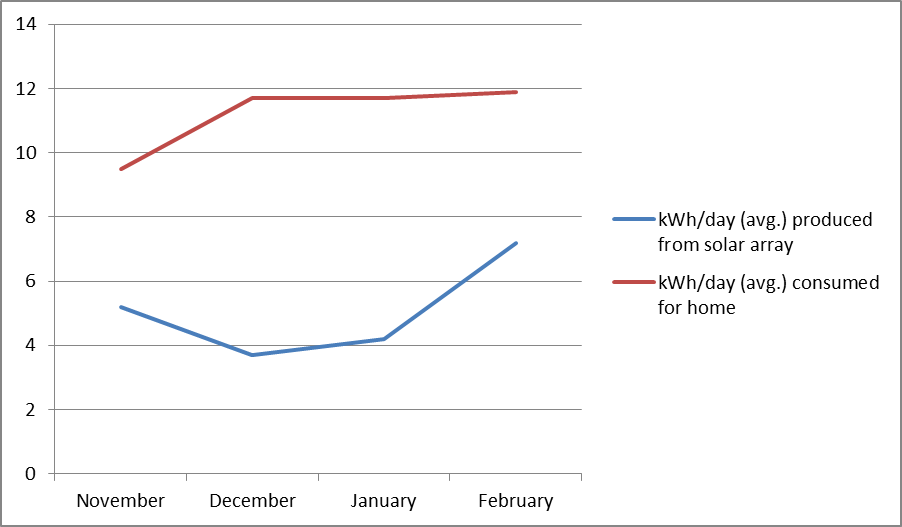
Photo of solar panels

The data is in: Year one for the solar array

A year ago yesterday I was toasting the completion of the solar array installation at my house. At the time, I knew that if I wasn’t at the cutting edge of the residential renewable energy movement, I was at least in a very small minority of homeowners who had actually purchased rooftop solar.

Now we finally have a large enough sample size to look at the data and draw conclusions about the effectiveness of the installation and how it fits into the context of this home’s energy use.

Production from the panels: 15.1 kWh per day. Electricity use in our home: 11.3 kWh per day.

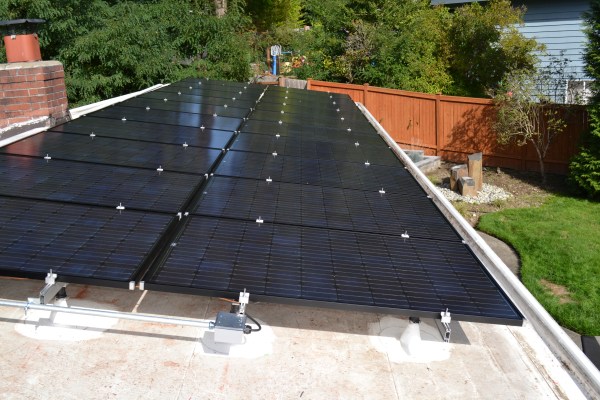
The sunlight hitting the surface of the 20 solar panels on my roof for a full year produced 5.5 megawatts of electricity, which is exactly what was forecast by the company that installed the system. So the system performed as expected, factoring in the location and orientation of the roof, the number and wattage rating of the SolarWorld panels, expected shading from backyard trees, and so on. I’m very appreciative to Northwest Electric and Solar, as well as Solarize Bellevue, for their honesty and accuracy in setting expectations for how the array would perform.

Some notable details on the production side:

  • The system averaged 15.1 kWh per day. Over time, it’s normal to see slight decreases in production, so it will be interesting to track, year-over-year, whether the system will continue to generate close to this level of production.
  • Production was highly dependent on season, even more so than I had anticipated. For example, December was unable even to crack 4 kWh per day. June, on the other hand, soared to just over 30 kWh per day. The best six-month span (what I like to call the baseball months, April through September) produced nearly 85 percent of the total for the year.
  • Cleaning the panels had little to no impact on production. I cleaned them myself one morning, and although I could see a difference in the appearance of the panels, I was disappointed to find no difference in the “before-and-after” numbers. However, I will likely have the array professionally cleaned just to confirm.

Probably the first question any homeowner considering solar has is, “Can the panels take care of all my electricity needs, and spin my meter backwards?”

The data bears out that this was definitely the case at our house. But it should be noted that our electricity consumption is significantly less than the average American household. The house itself is relatively small (fewer than 1400 square feet), there are only two of us living here, and we try to make energy-efficient choices in lighting, appliances, and so on. So the medium-sized array on the roof easily handled our electricity needs over the year.

Earlier this year, I purchased an electric vehicle. Right now, because of a promotional perk, I’m charging it free at fast-charge stations outside the house. But eventually I will use the charger I had installed in my garage. That will most likely use up the surplus electricity from my panels, putting us back at approximately net-zero. We could always add more panels to the roof, so that production continues to stay ahead of usage. At the moment, I can’t see doing that, but it is a good reminder that solar scales at least as far as your rooftop allows!

Sun money: How much do you save on your bills?

Some sharp-eyed readers have noticed that while I am faithfully documenting the kilowatt-hour power production of my rooftop solar array, I haven’t spent a lot of time discussing the money the panels are saving me. So in today’s post I take a sampling of bills paid to Puget Sound Energy for electricity in the years 2013-2015. It looks like going solar is slashing my electricity bill by about 60 percent.

In each of the three years I looked at a seven-month range of bills spanning January to July. I figured this would give me a good mix of winter and summer, short days and long days, so as not to skew the results too wildly in either direction. During this span of months in 2013 and 2014, I didn’t have solar panels; during this span in 2015, I did have solar panels.

From January to July of 2013, I paid PSE $317.86 for electricity, or about $45.41 a month. For the same months in 2014, I paid $303.97, or about $43.42 a month. Looks pretty consistent for the pre-solar figures.

However, from January to July of 2015, I paid PSE only $129.13 for electricity, or about $18.45 a month. That figure includes an administrative fee and tax amounting to $8.30 a month, which will always be applied no matter how much electricity the solar panels generate. Some homeowners begrudge the utility this fee, but I actually don’t. I understand that there’s some overhead involved in managing my account.

While we’re talking money, too, it’s important to remember that in the state of Washington, utilities send solar users a check once a year based on annual energy production of the customer’s array. In my case, PSE will be sending me a check for $498.30, based on 3322 kilowatt hours generated.


Array milestone: Net-zero for dirty electricity

Puget Sound Energy began recording data for the solar panel array at my house in mid-October last fall. The race was on: at what point would I be selling the utility clean power from my panels faster than I would be buying carbon-based, “dirty” power from them?

Predictably, through the short, dark days of fall and winter, we needed to buy more power from PSE than we were selling back to them. Round about February, though, as I read the numbers on my meter I began to notice a change. The number of kilowatt hours returned to the grid was beginning to increase more rapidly than the number of kilowatt hours supplied by the grid. March and April confirmed the trend: the “returned” measure was chasing down the “supplied” number, slowly but surely.

At last, on Day 250 of having solar panels (June 23), we have achieved net-zero! This means:

  • The dirty power we bought from PSE over the winter has now been offset by an equal amount of clean power that our panels have produced and pushed out to the grid.
  • The panels have produced power in excess of what was pushed out to the grid, enabling us to meet our household needs with renewable solar power.

Of course, it is true that the calendar will inexorably move towards a less favorable solar season, again. It is possible that “net-zero” is a temporary victory. What will be particularly revealing I think is how the numbers stack up exactly one year in. That will give us an annual baseline measure against which to measure future performance as well.

Speech for Solarize Bellevue event

Recently I spoke at the Solarize Bellevue ribbon-cutting event to celebrate the newly-installed solar array donated to the Boys and Girls Clubs Teen Center. It’s not often you get to share a stage with a mayor (Claudia Balducci of Bellevue), and not one but two mascots (“Blitz” from the Seattle Seahawks and someone called “Carbon Yeti”). So this was really a treat for me, and below is the speech I gave.

Four Reasons I’m Glad I Went Solar with the Solarize Bellevue Campaign

1) I feel a greater bond with my neighborhood and my city knowing that we did this together.

Some have asked me why, after years of thinking about getting solar panels, I finally dove in with a neighborhood Solarize campaign like this one. I could have just worked directly with an installer; there are quite a few now in the Seattle area.

But I like how Solarize Bellevue showed me that there are hundreds of others out there interested enough to show up at workshops around the city. It also showed me how several non-profit organizations in Bellevue wanted to get in on the fun, competing to win the prize of a free solar installation. And by the way: Congratulations to the winners of that competition, the Boys and Girls Club of Bellevue!

2) I got to know some great people.

The folks behind this program are smart, fun, hard-working people, and probably the best decision I made last year was to become a volunteer for Solarize Bellevue. Bret Turner at Northwest Electric and Solar really knows his stuff, and provided detailed answers to my questions as they came up. Ian Robinson ably assisted him during the campaign, and the three installers who came out to my house to do the real work of getting my panels up and running clearly loved their work.

Paul Andersson and Emma Johnson at the City of Bellevue provided invaluable management of the campaign, and of course Paula del Giudice of PPRC led the campaign with a steady hand and words of encouragement at all the right times.

3) Over the long term, I’ll be saving real money.

With tax breaks, incentives, low-interest loans, and leasing, solar panels have become a reasonable, affordable home-improvement option. My own system will pay for itself within 10-15 years, and many systems now available in the state see a return-on-investment even faster than that.

Just to take a quick example of the dollars and cents of going solar, let’s look at the impact of the federal renewable energy tax break. It’s a hefty 30 percent. When I signed my contract with Northwest Electric and Solar, they asked for two-thirds down and one-third on completion of the installation. At the time, I must admit I gulped a little bit as I wrote those two checks last fall. But now, just a few months later, I’ve gotten a tax refund that reflects the 30 percent renewable energy tax credit. In other words, Uncle Sam picked up nearly the whole amount of that second check I wrote.

Many people now think of solar as a wise investment opportunity, and when you have a program like Solarize Bellevue, which can reduce prices by taking advantage of bulk buying, it really does make sense financially.
SOMETIMES IT HELPS JUST TO TAKE A STEP BACK AND REALIZE WHAT A MINOR MIRACLE THIS TECHNOLOGY IS. WE CAN MAKE ELECTRICITY OUT OF SUNLIGHT. SUNLIGHT!
4) I’m doing my small part to help the environment.

In thinking about solar, sometimes it helps just to take a step back and realize what a minor miracle this technology is. We can make electricity out of sunlight. Sunlight!

That means that now it doesn’t make a whole lot of sense to blow up mountaintops just to get at some coal. It doesn’t make a whole lot of sense to risk life and limb to drill for oil in deep seas. It doesn’t make a whole lot of sense to have to protect ourselves against the nightmare of radiation from nuclear accidents or waste. It doesn’t make a whole lot of sense to burn carbon-emitting fossil fuels or frack the land beneath our feet. We can, at least in part, make use of that quiet and undemanding gift called sunlight.

Thanks to Solarize Bellevue, I now generate half of my electricity right up on my roof. My hope is that through programs like Solarize Bellevue, and through the educational efforts of organizations like the Boys and Girls Club of Bellevue, we’ll see more and more solar panels dotting the rooftops of our city!

Powering through winter solstice in Seattle

November through February are pretty dark months in Seattle. Often you’ll leave for work before the sun comes up, and return home after the sun goes down. You might get a sunny week or two in January, but most years February’s got you searching for clinical definitions of Seasonal Affective Disorder.

Because my solar array was installed last fall, I have been paying extra close attention to insolation statistics through this period, the darkest third of the year. I now have data for four full months of operation, which should essentially tell me the worst news I can hear about how my solar array is performing.

Chart showing monthly solar data

February has been the best month so far, with roughly 61% of our electricity needs powered by the solar panels. By contrast, December’s solar output offset only 32% of our electricity. Overall, we are seeing approximately 45% of our demand being supplied by solar power, with an average daily output of about 5 kWh from the renewable energy source.

At some point this summer (July? August?) I bet we’ll see a crossing of those lines on the chart, indicating that solar is providing full coverage of my electricity and then some. That said, this exercise has been a good reminder to me to work on limiting my consumption, at the same time as I cross my fingers for sunny days ahead.

Performance monitoring is a difference-maker for the solar consumer

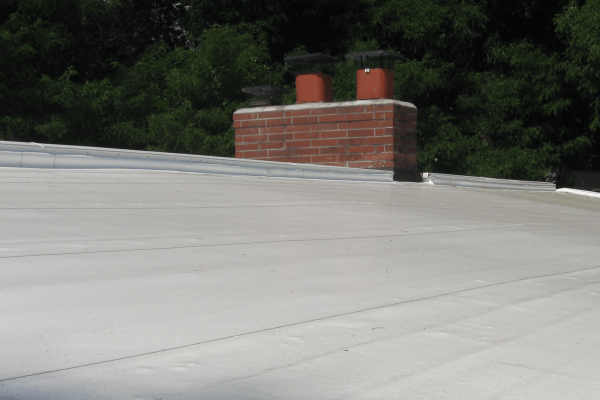
When I replaced my aging torchdown roof with a new “cool” roof (white PVC membrane to reflect heat), I did so hoping to keep the house more comfortable in summer heat, and avoid having to install air conditioning, a known energy hog. But honestly I’ve had no real way of measuring the success of the investment, other than simply confirming that in the summers since, I haven’t needed AC.

But with my solar panels, I can get hard data, and lots of it, from multiple sources.

Enphase Energy, which provided the microinverters for my array, has a website that allows me real-time and historical performance data in monthly, daily, and even hourly views. If any of my 20 microinverters is malfunctioning, the site lets me know and specifies which one so the installer can fix the problem more efficiently.

Screen shot of Enphase monitoring website

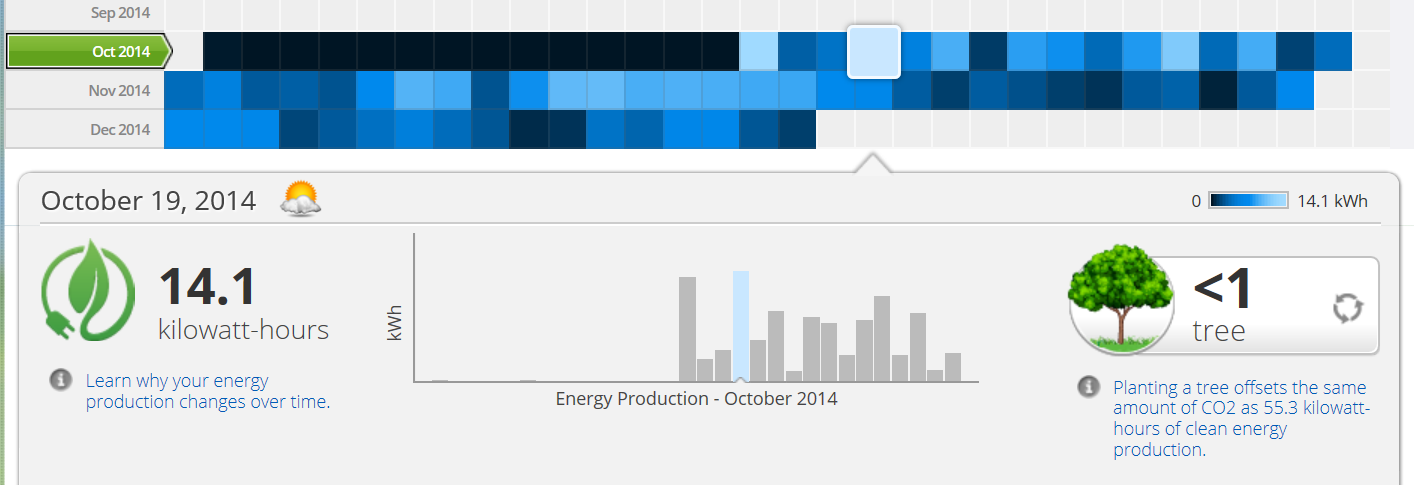
The Enphase web-based tool shows how much power my array is producing every day. The better the production the lighter the box color. This shows that my best day so far came early on, with 14.1 kWh on October 19.

And if I forget to check the site for this information, Enphase bails me out by sending me a monthly summary email anyway.

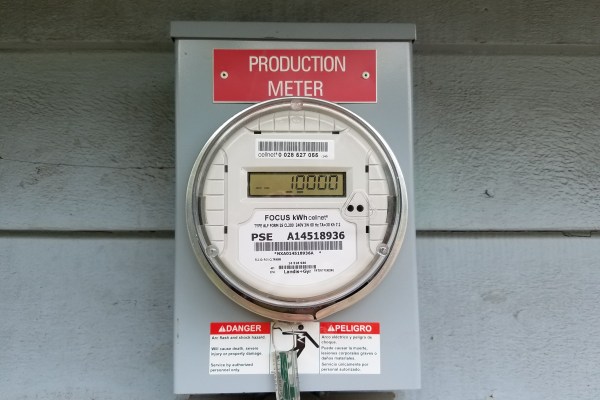
As for Puget Sound Energy, the utility not only installed new digital meters when my panels went up, but they also familiarized me with how to read the pertinent information from the meters, and have included solar performance data on my monthly bills.

This level of feedback about my solar investment instills confidence that solar installers, the solar industry, and utilities are treating renewable energy as a viable, measurable option for consumers to consider on its merits. The numbers don’t always make me happy (I’m looking at you, November 28). But I’m grateful that this is one home improvement I can always assess accurately.

28 days in: What my net meter is telling me

Just a quick entry today, with performance data from the first four weeks of my rooftop solar array. The news is both disappointing and hopeful.

During this time span, we used an average of 12.3 kWh per day, which is more than normal for this household. More on that in a moment. To meet that daily demand, just a tick more than half (6.2 kWh) came from solar power production. 6.1 kWh had to be purchased from the utility.

Over time, I think we’ll see the percentage of my electricity needs offset by solar go way up, from roughly 50% to closer to 100% or more. Here’s what I think happened:

  • Household demand was up due to wrapping up a remodeling project from the summer. Lots of power tools plugged in in the garage, and at one point a high-powered fan blowing 24/7. (Don’t ask…it had to be done.)
  • Solar production was weak for days at a time, as we got soaked with much higher than normal rainfall in October. What I’ve observed so far is that the array is of course highly productive on sunny days, surprisingly productive with the indirect light of partly-cloudy days, but scarcely productive at all on those wall-to-wall rainy days that the Pacific Northwest can sometimes have.

As we head in to the darkest weeks of the year now, it’s possible the array will offset even less of my overall electricity needs. But I knew this going in. Spring and summer of 2015 will be the big test.

Selecting and working with an installer

In 2012, the State Energy Office of the Department of Commerce compiled a directory of renewable energy, energy efficiency, and sustainable products companies in Washington state. They listed some 50 solar installers, about a dozen of which are right here in the Seattle area. Both counts may indeed be higher now, in 2014.

I’ve met with several of the owners and employees of these small businesses, and have come away mightily impressed with the combination of drive, business savvy, and environmental awareness I see in them. These businesses are growing to meet local demand for solar, and they can get almost overwhelmingly busy during the summer months.

So how do you decide who to work with? Here are some tips:

  • Get free site assessments and bids from at least three companies. There are informative variations in the size, placement, panel manufacturers, and costs of the array options they recommend. If you contact a company and they don’t get back to you within a week, that’s an early indication that they are not prioritizing your business. Move on to the next one.
  • Make sure the consultant who comes out to your house spends plenty of time up on your roof, taking measurements and testing your solar window (shading). This is a crucially informative step in the process, typically taking an hour or more. One consultant I met with eyeballed the situation from the ground, and gave me some quick and incorrect advice. Once it was clear that I expected to get up on the roof with him, he later corrected his mistake.
  • Listen carefully to your consultant, but don’t be cowed by industry jargon. Electrical engineering and solar photovoltaics are technical fields, and it is easy to get lost in the verbal thicket of “loads” and “maximum power-point tracking” and “microinverters.” But if you have a basic understanding of what it is you want (the type of panels, where you want them, how many, and so on), stick to it. Turn on your internal radar to detect when a consultant may have an agenda that he’s pushing you to align with. At the same time, establish a friendly and respectful dialogue with your consultant because he may share with you legitimate, real-time information about the solar industry in your area that you’d have no way of knowing otherwise.
  • Look for neighborhood bulk-buying programs. These can drive down your costs by 10 percent or more, and can simplify your experience by selecting a reputable installer for you. Installers must submit an application to be part of the campaign (they want to because these campaigns generate hundreds of new potential customers who turn out for solar workshops). If you want to be more involved, you can even ask to be part of the selection committee that chooses the installer for the campaign.